
Robot cladding and hardening series
TY-RF5018 Laser Cladding System
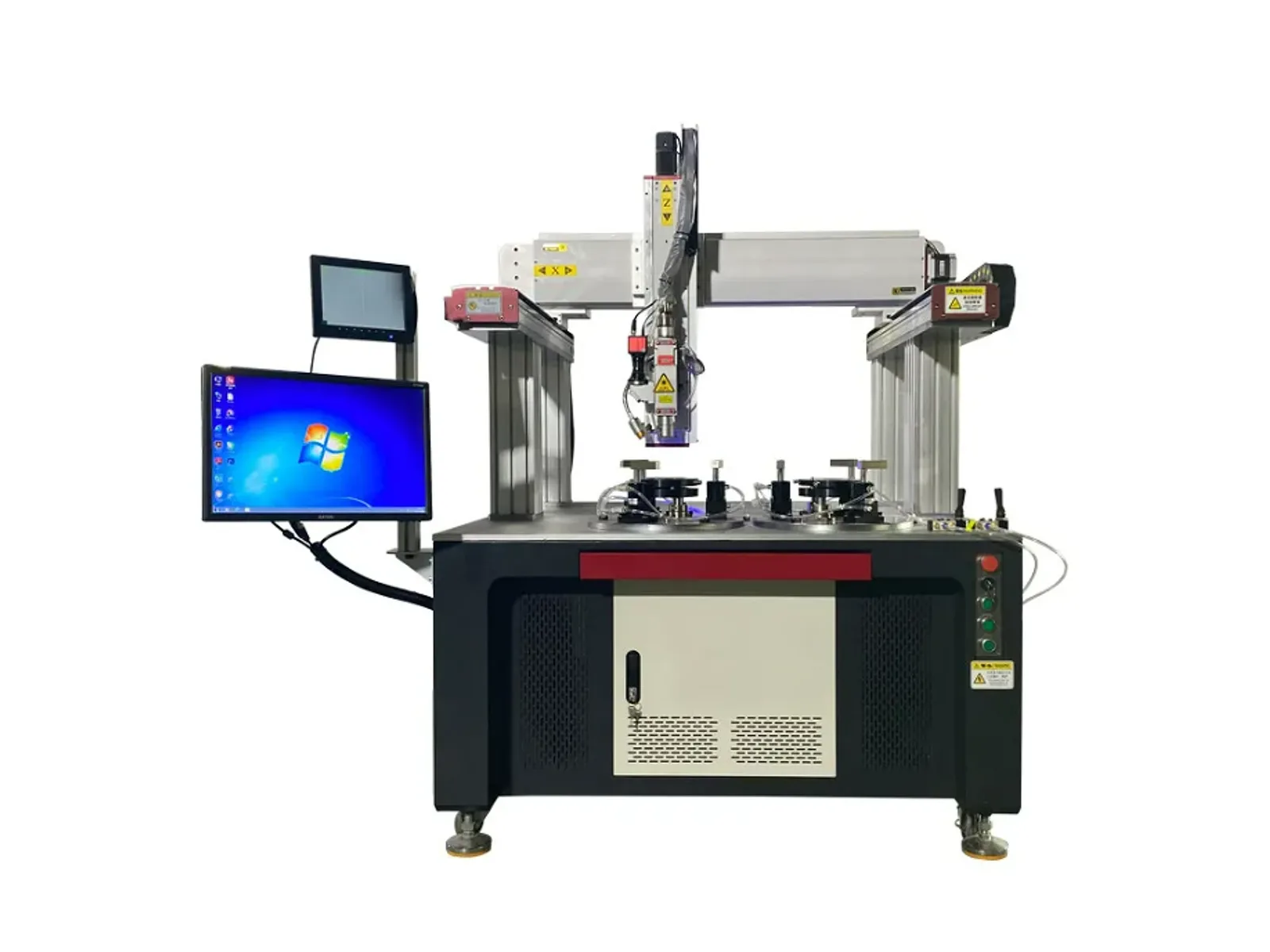
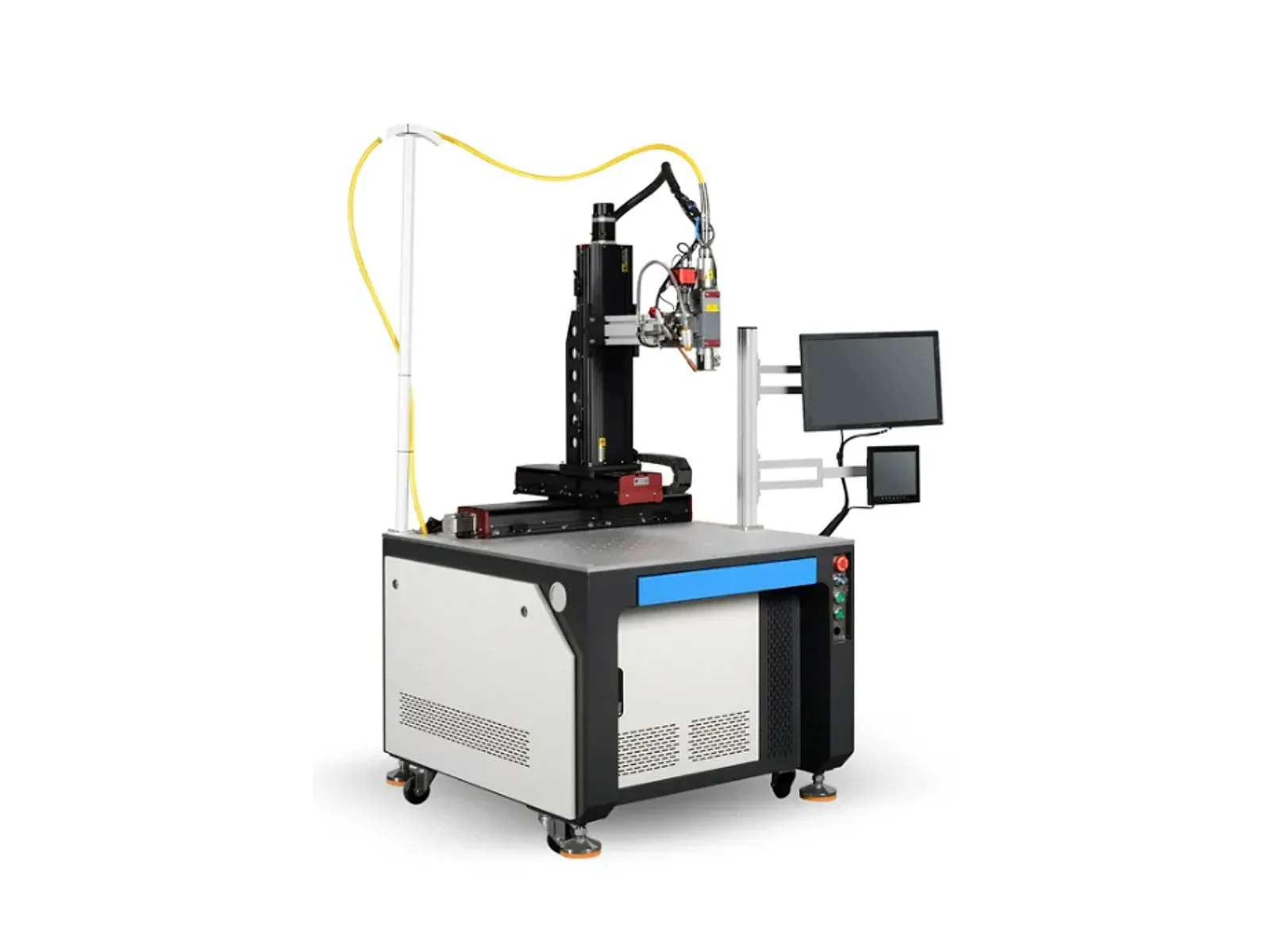
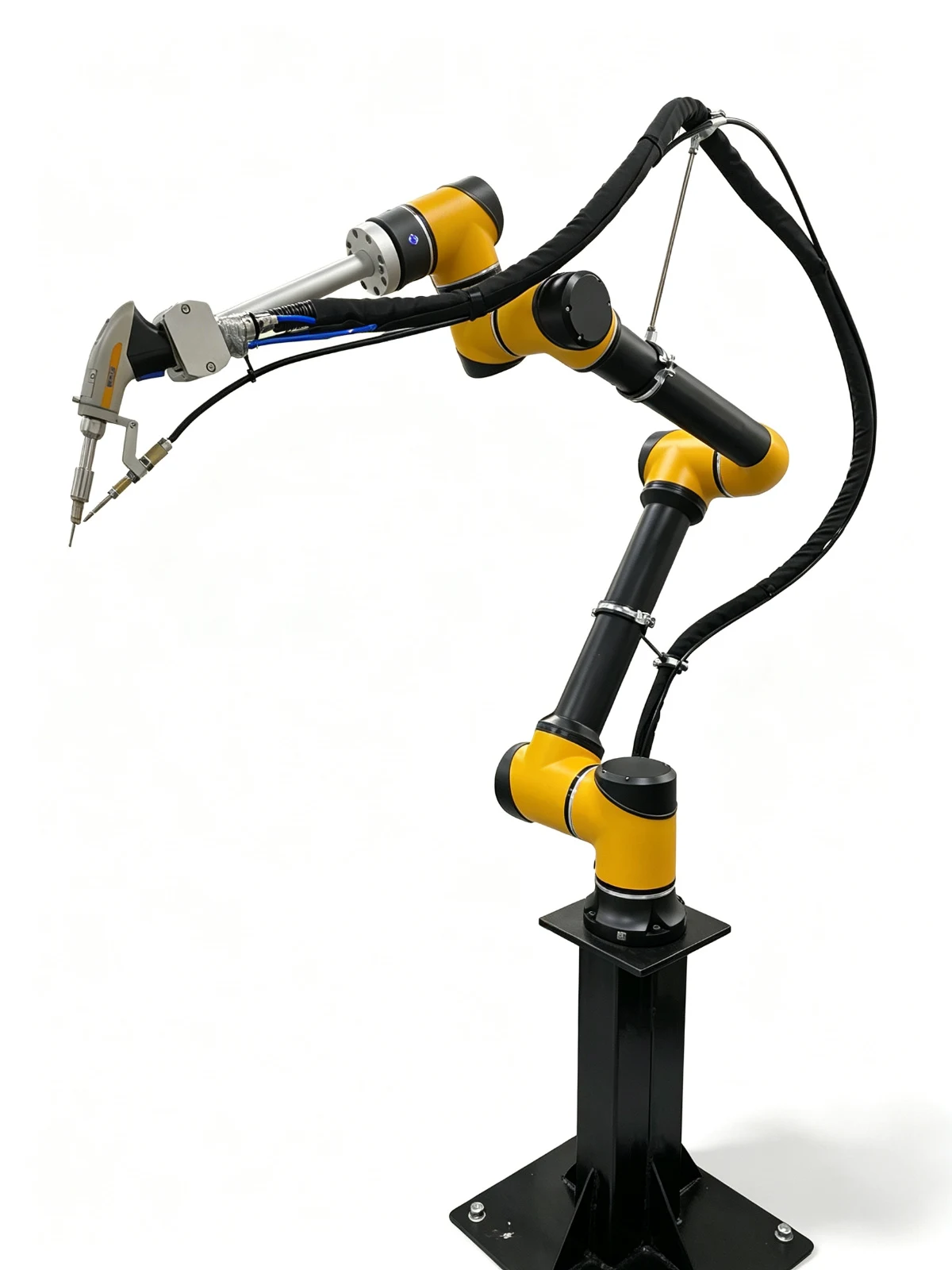
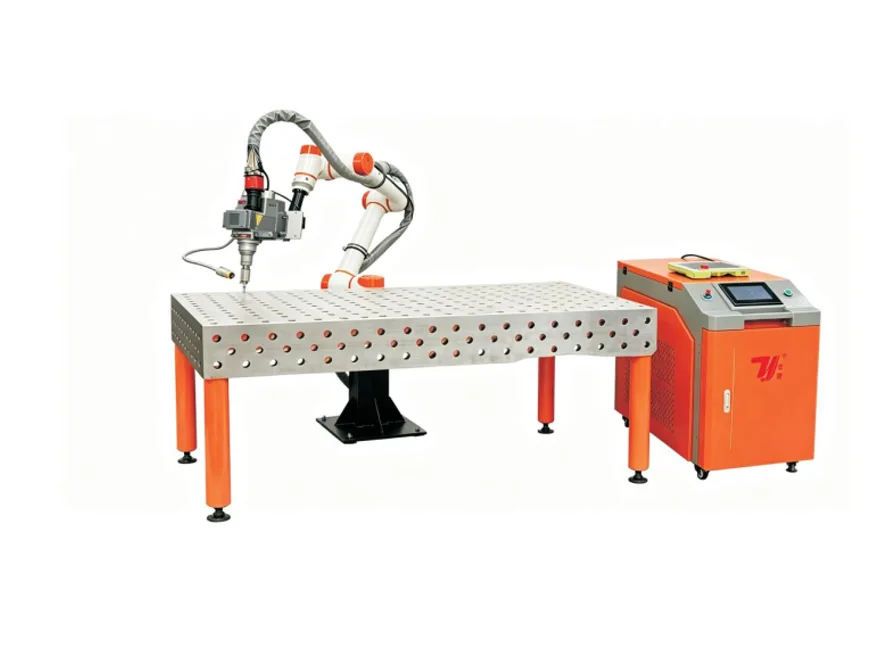
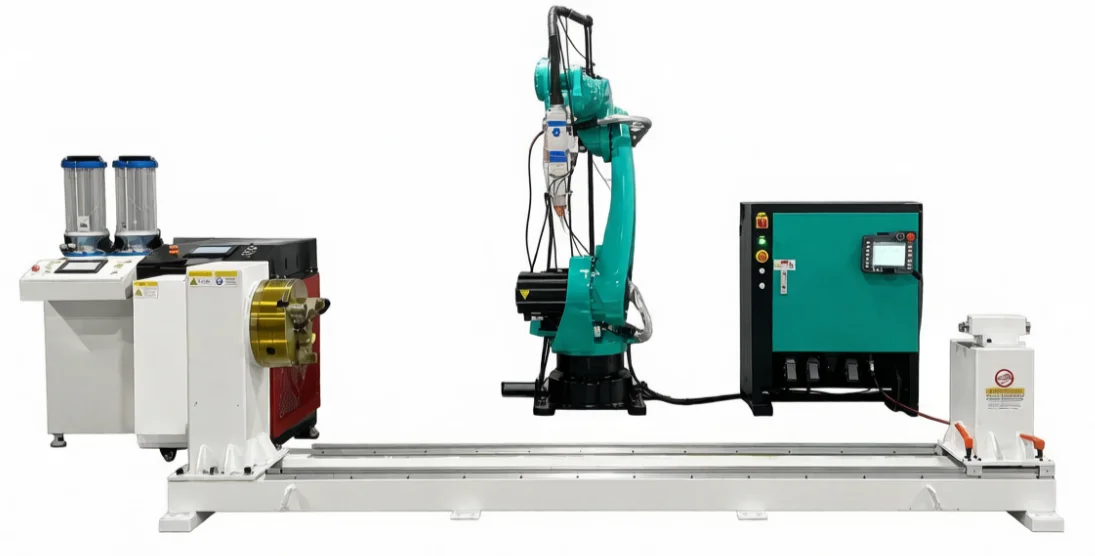
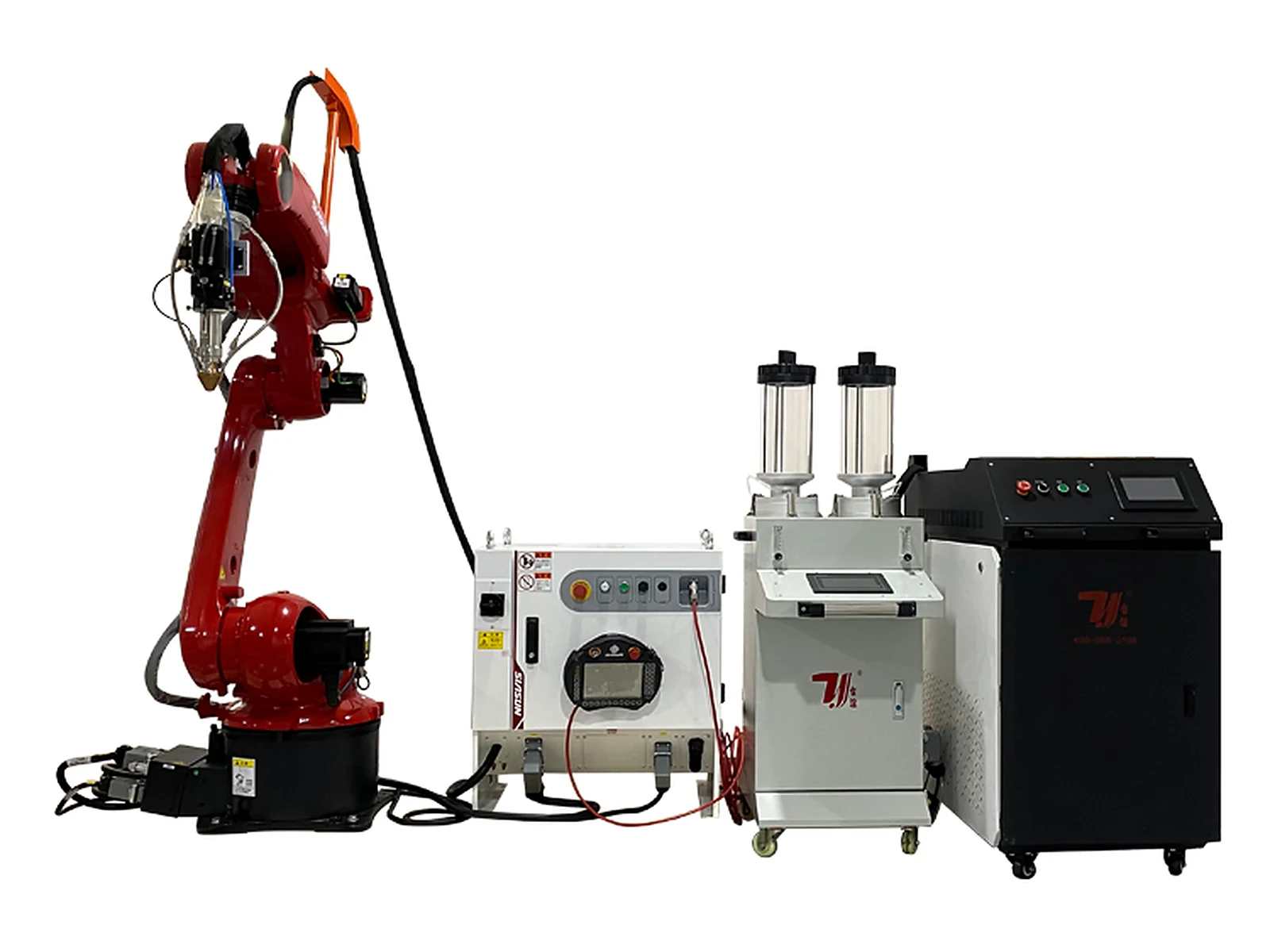
TY-RF5018 is a configurable laser cladding workstation series for surface repair and strengthening. Select the process first, then define the robot, head, powder feeding and workholding package for external surfaces, accessible internal bores or localized hardening.
Whole-machine warranty: 2 years · Final price and delivery timing depend on laser power, robot reach, cladding or hardening head, powder feeder, positioner, rail, guarding and integration scope.
Specifications
TY-RF5018 technical data
Robot and laser configuration
- Series
- TY-RF5018
- Robot structure
- 6-axis industrial robot
- Listed laser power
- 3,000 / 6,000 / 12,000 W
- Robot arm span
- 1,800-2,100 mm, optional configuration
- Positioning accuracy
- ±0.05 mm
- Laser source
- Fiber laser
Cladding process
- Laser wavelength
- 1,080 ± 5 nm
- Fiber core diameter
- 600 μm
- Listed cladding thickness
- 0.5-2 mm
- Processing heads
- Cladding head / hardening head / internal-wall cladding head, by configuration
- Powder feeding
- Integrated powder feeder; single or dual feeder by configuration
- Internal-wall capability
- Dedicated head listed for internal diameters ≥100 mm
Control, cooling and utilities
- Control system
- PLC with teach programming / offline programming
- Power supply
- 380 V ±5%, 50/60 Hz
- Cooling method
- Water cooling
- Listed operating temperature
- 0-50 °C
- Whole-machine warranty
- 2 years
Features
Configure the cladding cell around the part and process
One series, multiple configurations
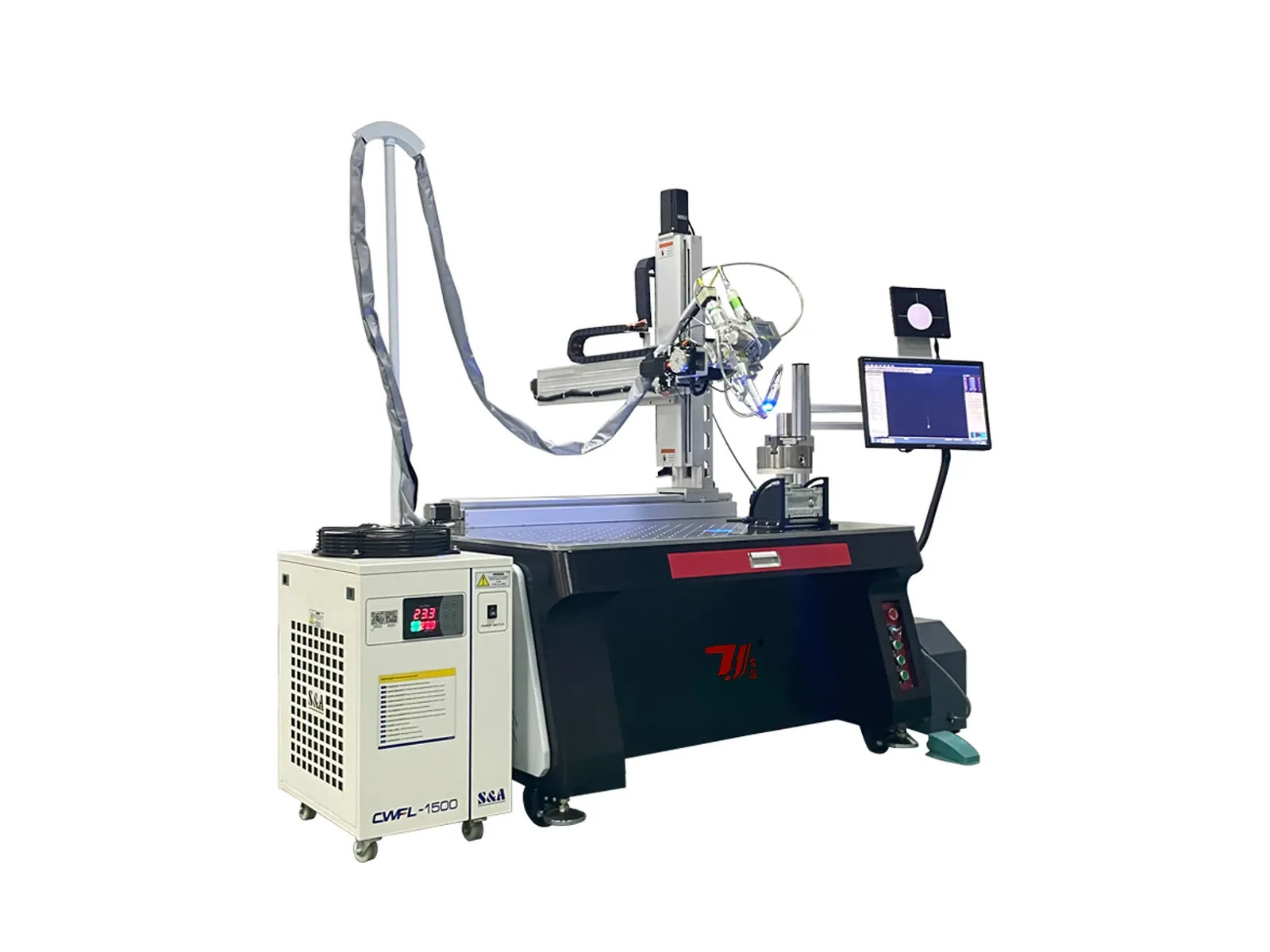
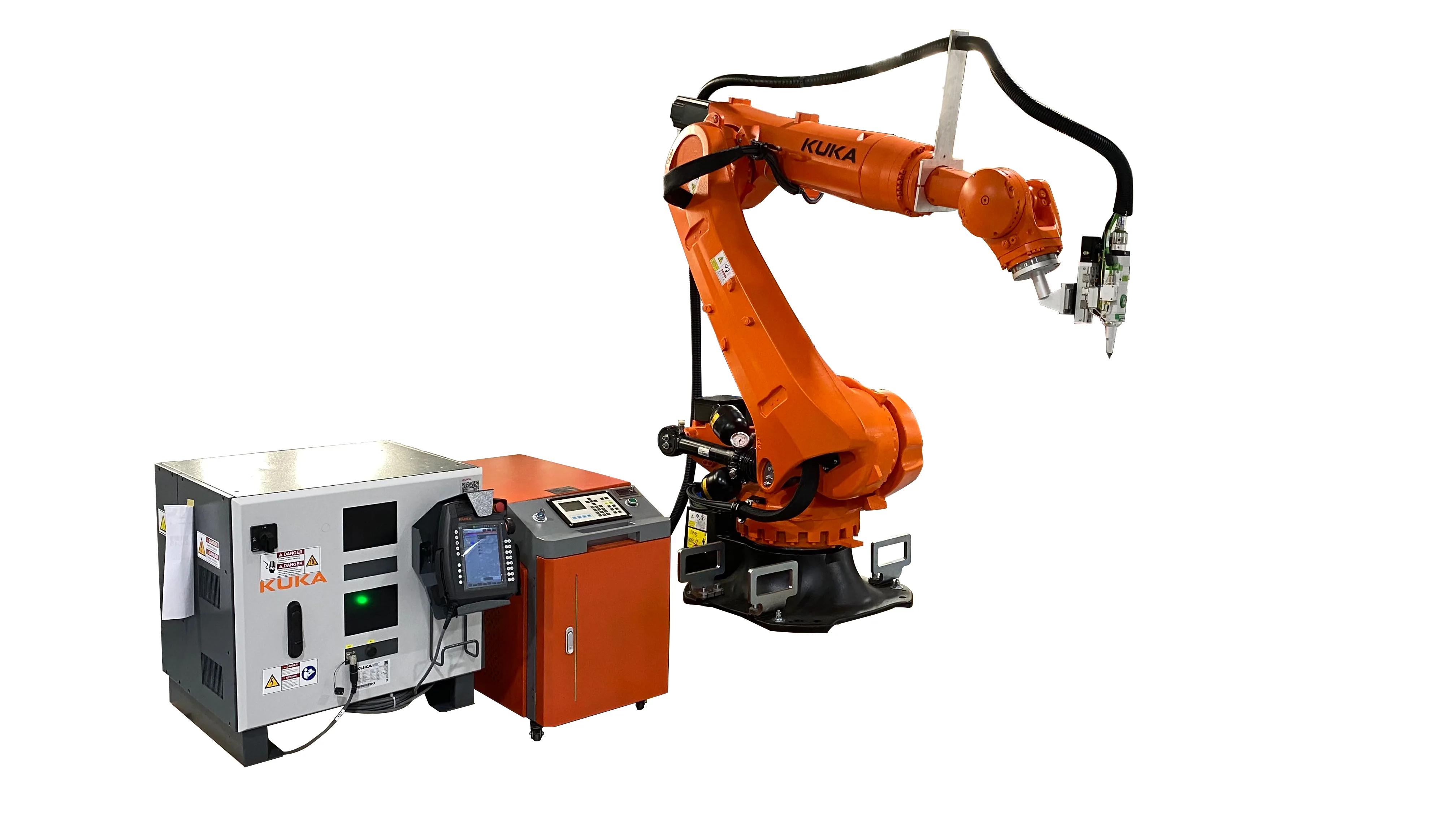
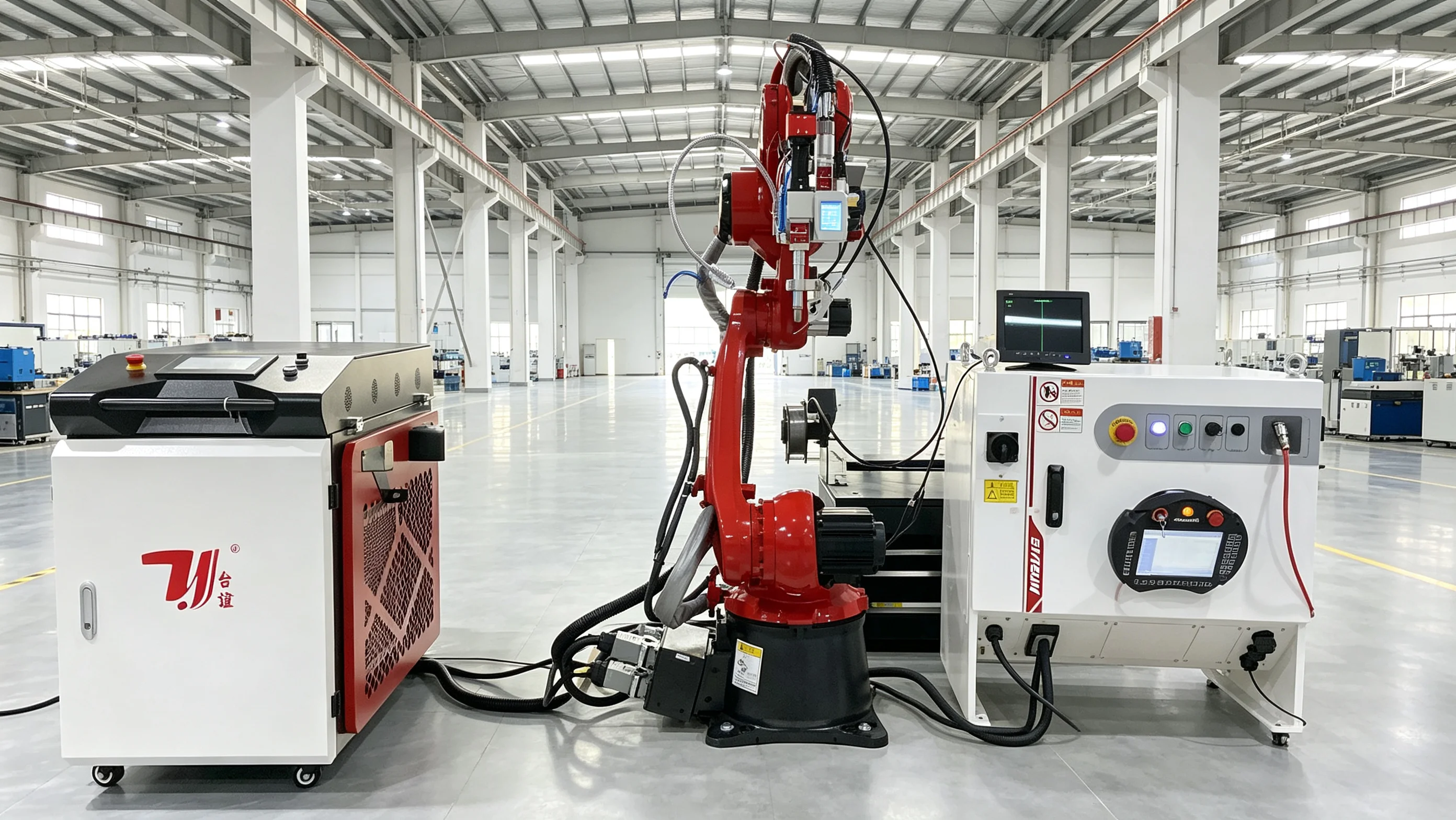
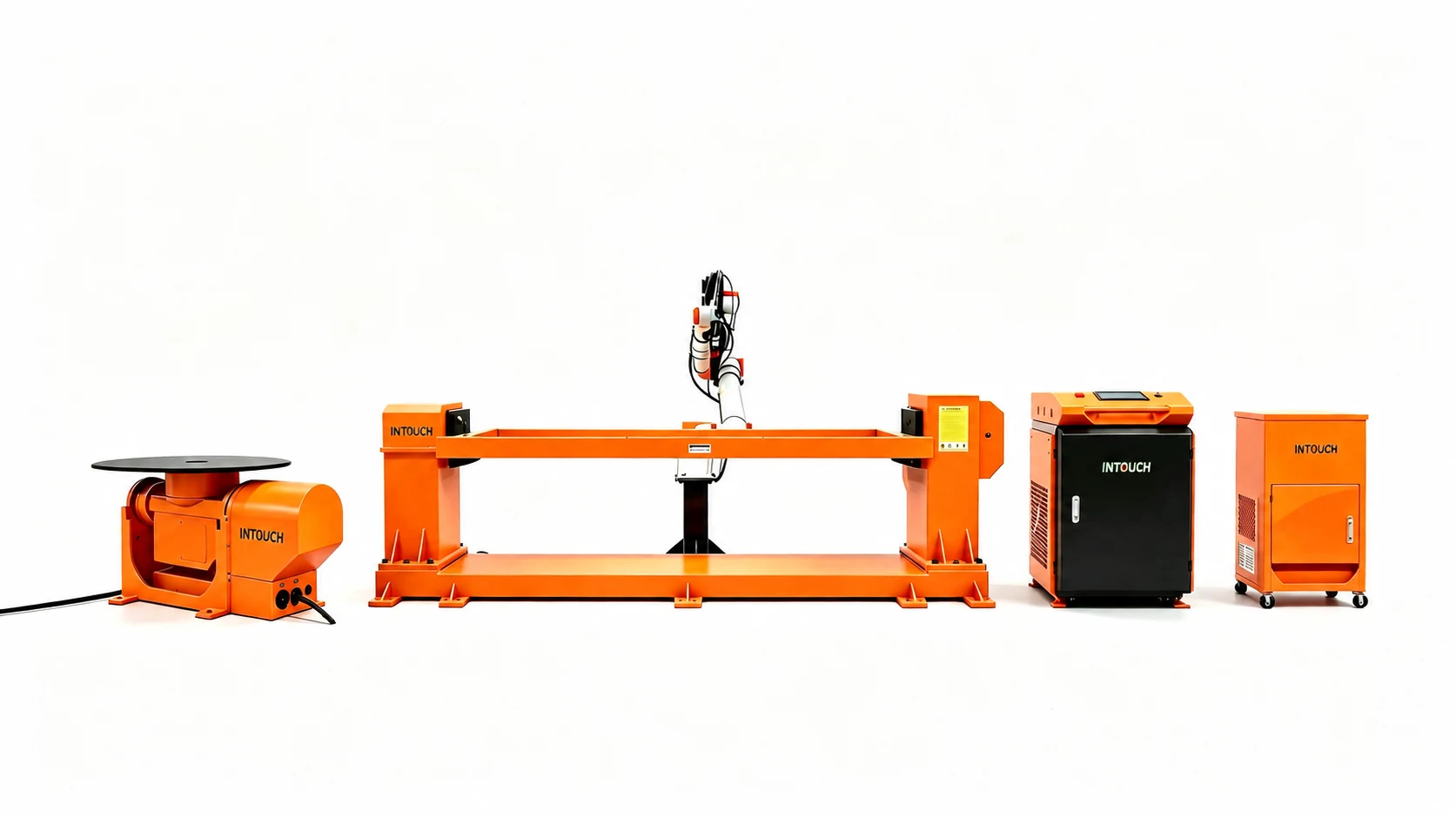
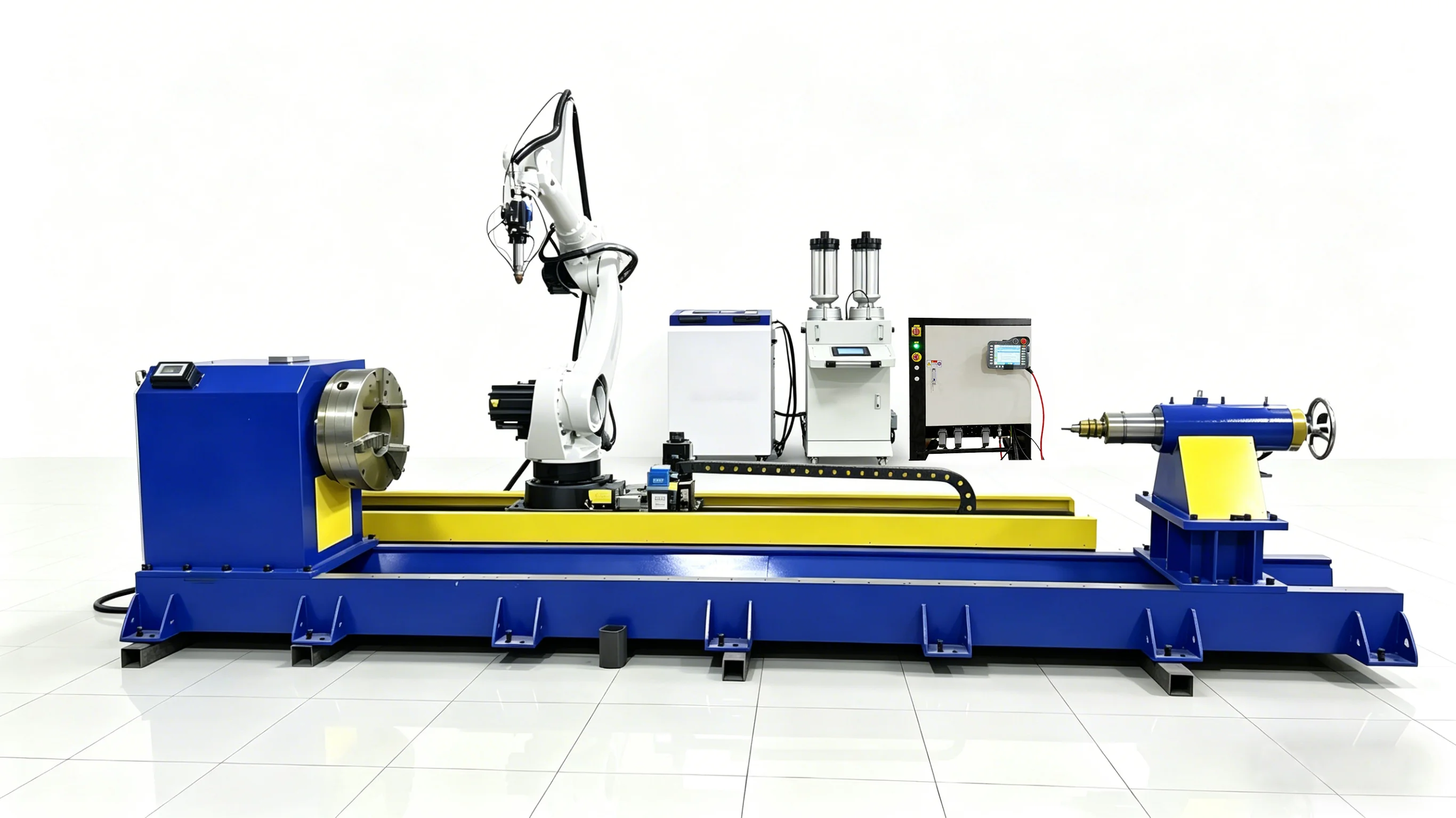
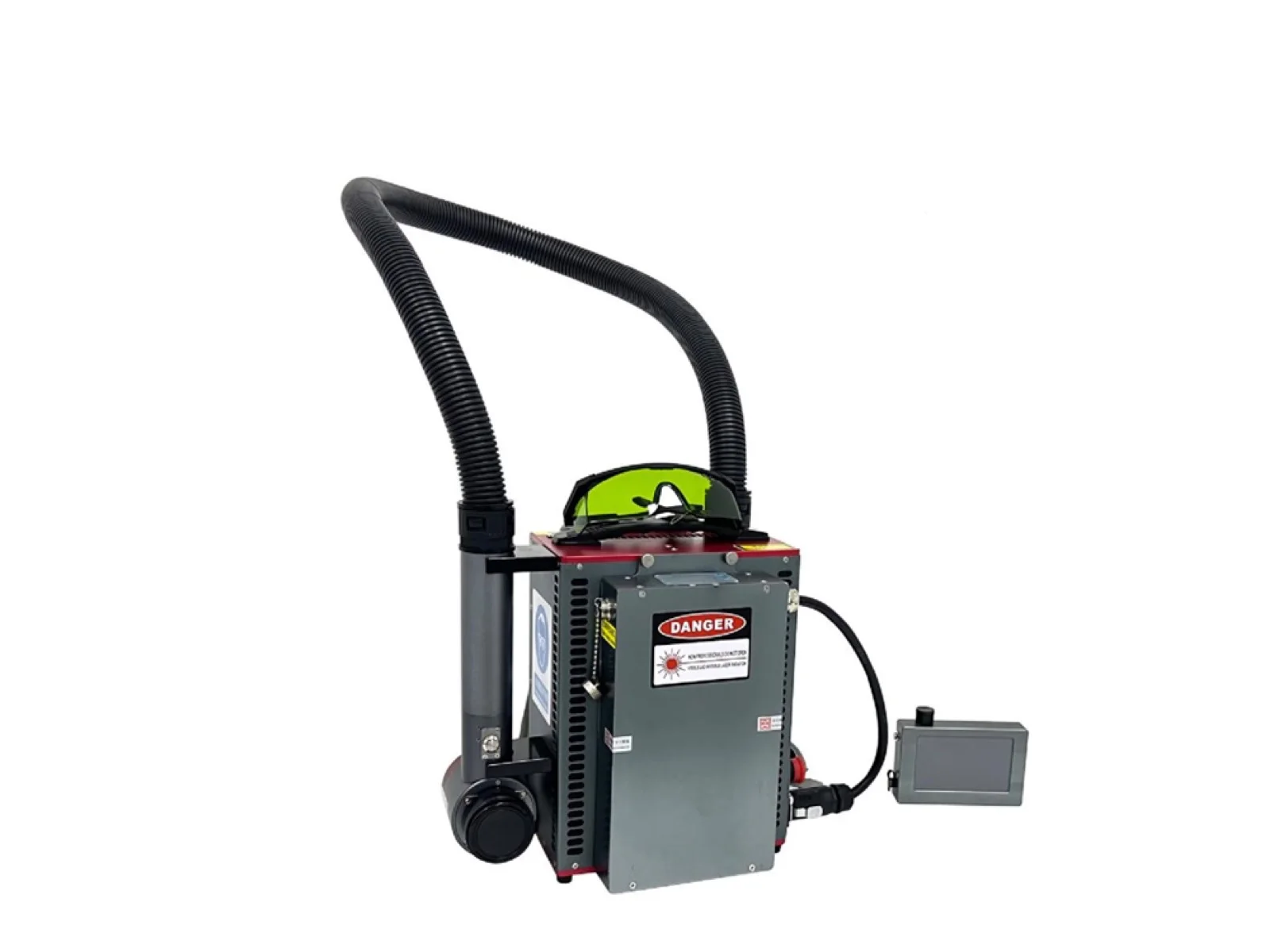
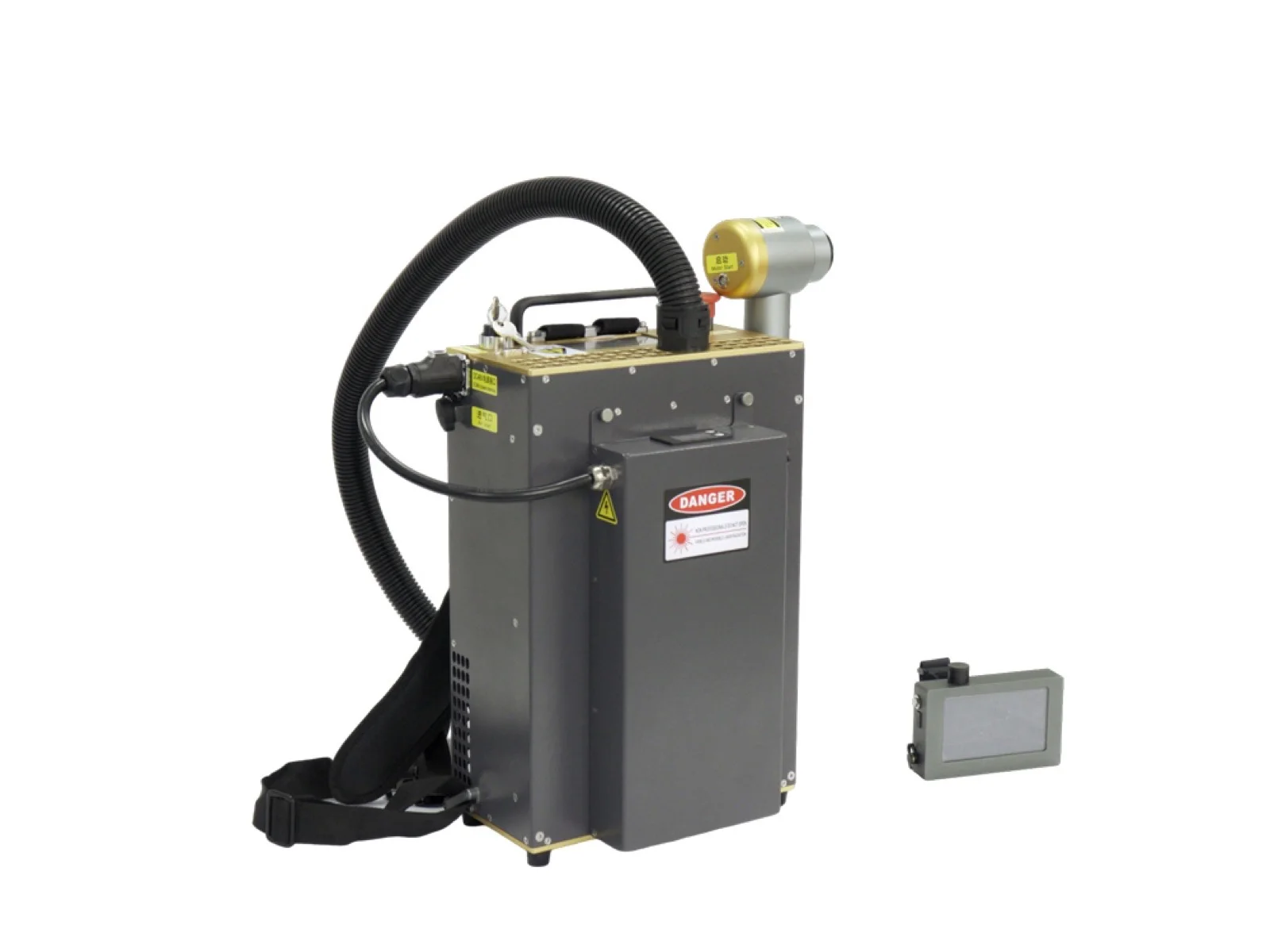
TY-RF5018 is organized as a series covering robot workstations, internal-wall processing, robot cladding and combined cladding-hardening configurations.
Six-axis path control
The industrial robot follows programmed paths across shafts, surfaces, curves and irregular parts while the workholding package is configured around the component envelope.
Cladding or hardening head
The processing package can be configured for deposited-layer repair, surface strengthening or combined cladding and hardening work according to the submitted part and process target.
Internal-wall processing option
A dedicated internal-wall head is listed for pipes, cylinders and sleeves with internal diameters of at least 100 mm, subject to depth, access and workholding review.
Powder and motion integration
The laser source, powder feeder, water chiller, robot, positioner or rail and electrical controls are integrated as one project-specific processing cell.
Open workholding configuration
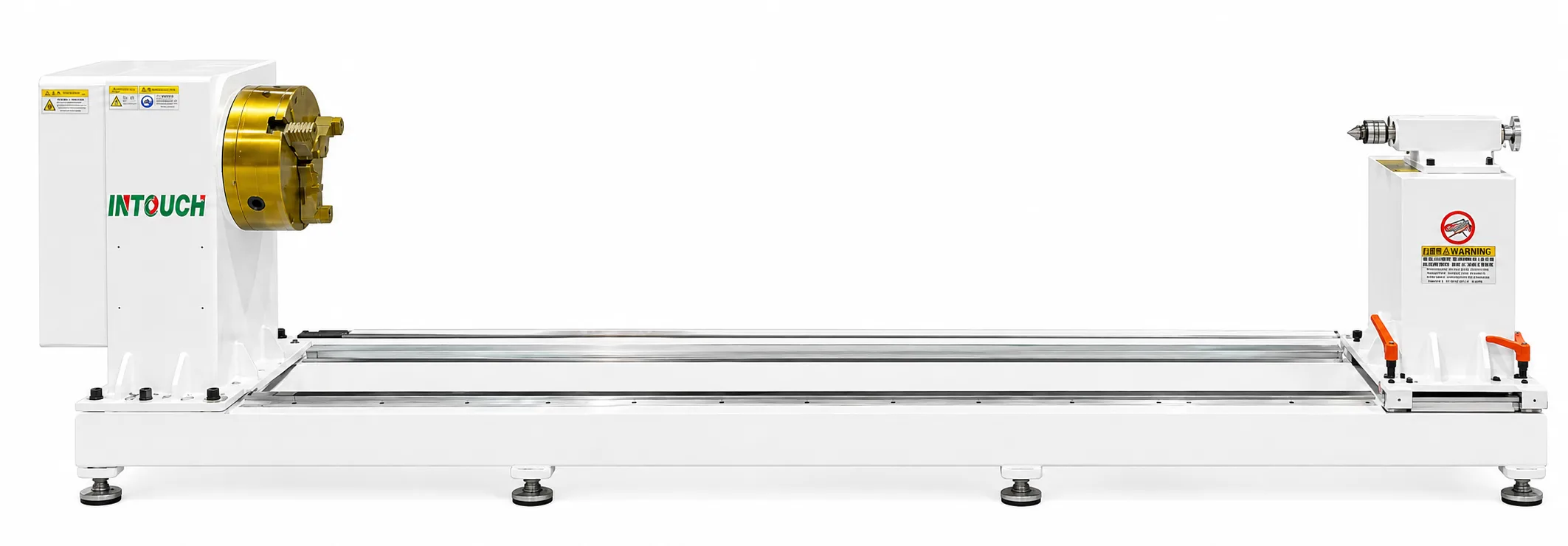
Positioners, tailstocks and robot rails can be selected around long shafts, rotary parts and larger repair work rather than forcing every component into one fixed enclosure.
Project configuration
From part review to sample acceptance
A typical sequence for defining the system around the submitted component, repair objective and process target.
- 01
Part drawing and base-material review
- 02
Repair or strengthening target definition
- 03
Cladding material and process trial planning
- 04
Head, laser power and powder-feeder selection
- 05
Robot reach, positioner and rail check
- 06
Toolpath and offline-programming plan
- 07
Guarding, extraction and utility definition
- 08
Sample acceptance and installation scope
Configuration scope
Four TY-RF5018 configurations within one series
Final laser power, processing head, powder-feeding method, workholding and motion package are confirmed against the part geometry, access and target layer or hardening requirement.
Related products
Other cladding and robot processing paths
Robot laser cladding
Review robot posture, positioners and fixture clearance for external and curved surfaces.
Bore access and toolingInternal-wall cladding
Check bore diameter, depth and entry clearance for the dedicated internal-wall head.
Two treatment objectivesCladding and hardening
Separate deposited-layer repair from localized hardening and define each treatment zone.
Related industry solutions
Explore the applications and laser processes connected to this equipment.
View all industry solutions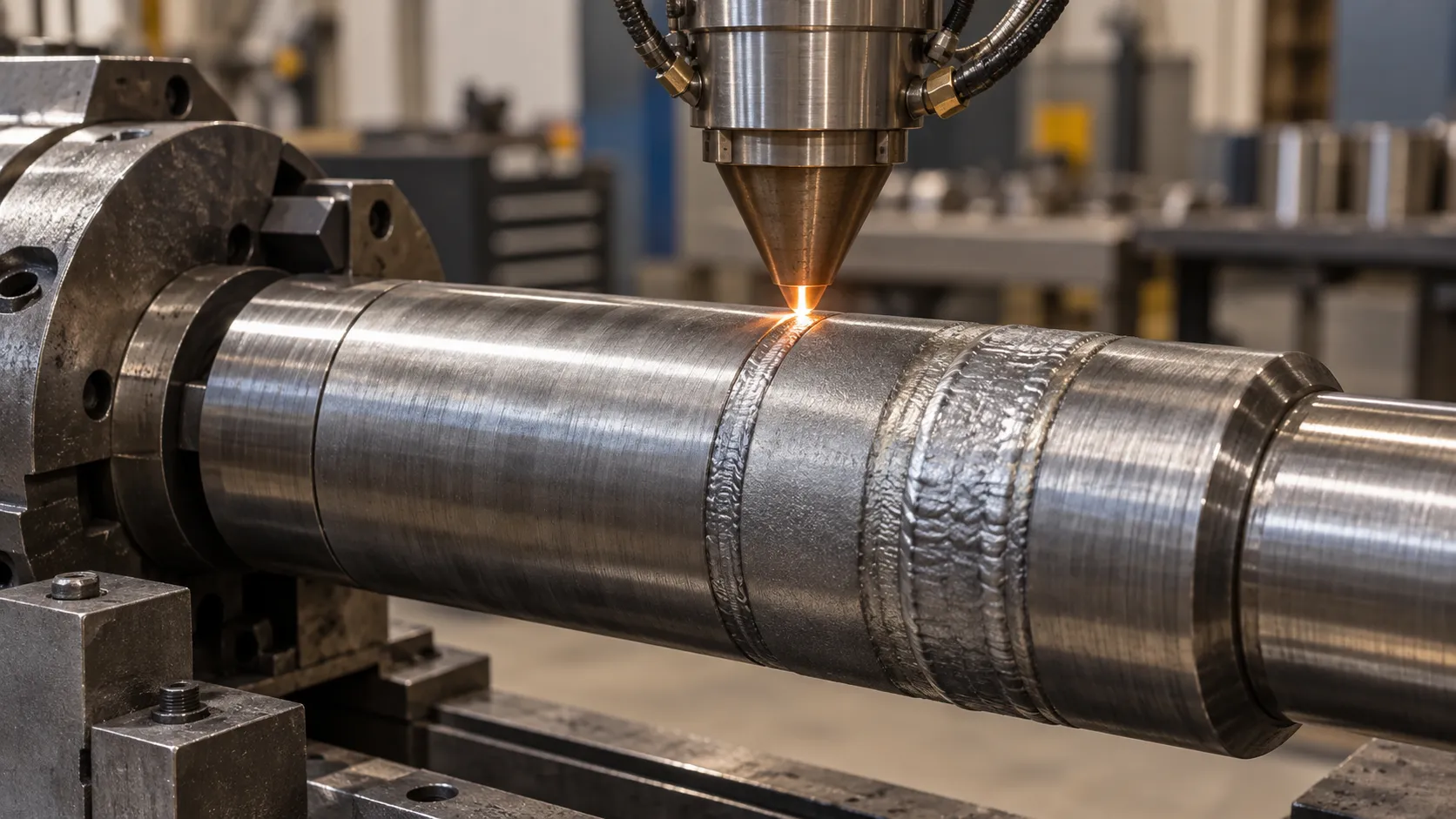
Select the workstation configuration by treatment task
Begin with the surface and the repair objective
Mark the areas to be treated on the part drawing and describe the current wear, corrosion or dimensional condition. Distinguish a deposited repair layer from a surface-hardening requirement so the process head and material review address the intended result.
Choose the motion and access arrangement
External curved surfaces, internal bores and long rotating components place different demands on head access and workholding. Use the dedicated configuration pages to review the relevant path, then confirm robot reach, positioner or rail requirements for the full assembly.
Define the complete equipment boundary
The series combines the laser, head, powder feeding, cooling and controls with project-specific motion equipment. Agree which fixtures, handling equipment, guarding, extraction and installation services belong in the quotation; a series name does not define one fixed supply package.
Machine selection questions
Is TY-RF5018 one machine or a configurable series?
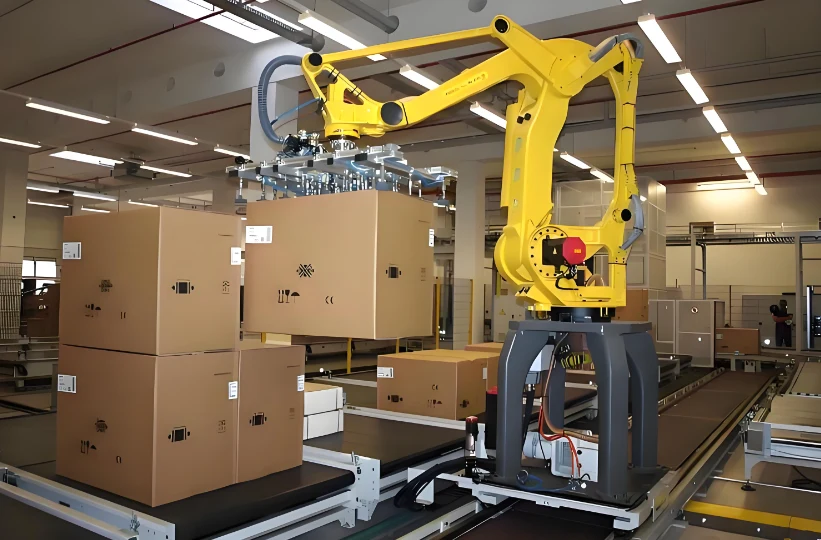
It is a series with workstation, robot cladding, internal-wall and cladding-hardening configurations. The submitted part and treatment objective determine the final head, motion, powder-feeding and workholding package.
How should I choose between the TY-RF5018 and TY-RF2018?
Compare the required path and workholding. TY-RF5018 uses a six-axis robot configuration, while TY-RF2018 provides a CNC platform arrangement. Check the complete part-and-fixture envelope and loading needs before selecting a series.
Does the listed layer thickness define the finished part tolerance?
No. The listed 0.5–2 mm cladding thickness describes a process range. Agree the required finished dimensions, any subsequent machining and the layer acceptance criteria for the actual material and repair.
Are the internal-wall and hardening heads all included?
The heads are configuration choices. Specify whether the project needs external cladding, internal-wall cladding, hardening or an agreed combination so the quotation identifies the required equipment.
What should I provide for a workstation proposal?
Send the part drawing, base material, current surface condition, treatment areas, target layer or hardening result and expected output. Include loading constraints, available floor space and the intended inspection criteria.
Request a quote
Tell us the part. We will tell you the machine.
Price depends on part dimensions and material, repair or hardening target, laser power, processing head, powder feeder, robot reach, positioner or rail, guarding, extraction and installation scope.
- Phone+86 153 6281 4831
- Emailsales02@taiyilaser.com
- WhatsApp+86 153 6281 4831